

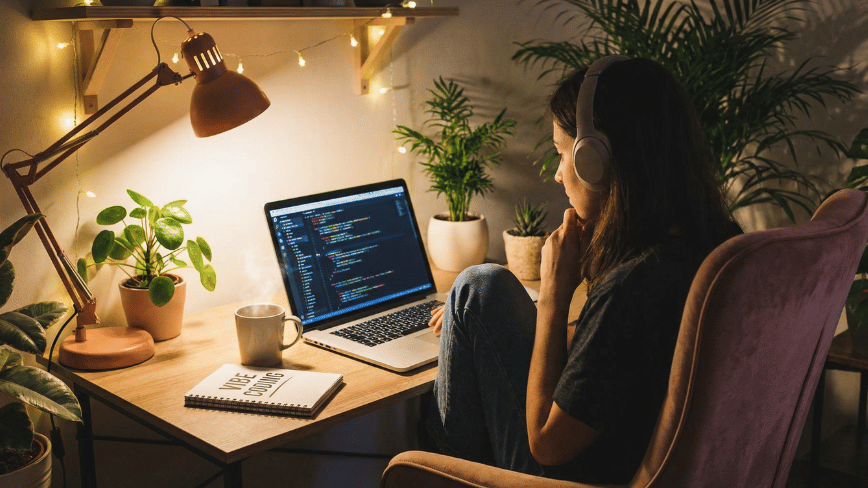
In brief: AI-driven 'vibe coding' tools have sparked an unprecedented 84% increase in new app submissions to Apple's App Store within a single quarter, marking the largest growth in a decade. This influx is overwhelming Apple’s review system, with approval times extending from 24 hours to as many as 30 days. In response, Apple has started removing apps that breach its self-containment regulations, resulting in tensions with the platforms that are contributing to this boom.
Currently, the App Store is experiencing more new app submissions than it has in the last ten years. This surge is not due to a rise in professional developers but is attributed to 'vibe coding'—a term recognized by Collins English Dictionary as the word of the year for 2025. Coined by Andrej Karpathy, a co-founder of OpenAI, vibe coding allows users to create software by articulating their requirements in everyday language, which a large language model then translates into code. This has drastically lowered the barriers to app development, leading to overwhelming demand on Apple's existing infrastructure.
According to various reports, the number of new apps submitted to the App Store soared by 84% in a single quarter as vibe coding gained traction. This data aligns with findings from Sensor Tower, which recorded a 56% year-on-year increase in iOS app launches in December 2025, and a 54.8% rise in January 2026—the highest growth rates observed in four years. In total, Apple saw 557,000 new app submissions in 2025, marking the largest annual increase since 2016.
The Tools Driving the Surge
The rapid increase in app submissions is largely due to a select group of platforms that have transformed natural language into deployable software. For instance, Cursor, developed by Anysphere and utilized by seven million developers, achieved over $2 billion in annual revenue by March 2026 and was valued at $29.3 billion following a funding round in November 2025. Lovable, which caters to non-technical users, reported $200 million in annual revenue by late 2025, a remarkable increase, and raised $330 million in a Series B round at a valuation of $6.6 billion in December 2025. Replit generated $240 million in revenue during 2025 and serves over 150,000 paying customers, with aspirations to reach $1 billion in revenue for 2026.
The commercial appeal of these platforms is clear: anyone with a concept and internet access can now create and submit an app. However, this dynamic poses a significant challenge for Apple, as the mechanics that make vibe coding attractive are fundamentally at odds with the App Store’s review process.
Understanding Apple's Structural Dilemma
The essence of vibe coding lies in its ability to generate and execute new code dynamically, responding to user inputs in real time without adhering to a static codebase. Conversely, Apple’s App Store review protocol was established for a different paradigm: developers submit a fixed build for review, which Apple evaluates before releasing it to users. Guideline 2.5.2 of Apple’s App Review Guidelines clearly states that apps “may not download, install, or execute code which introduces or changes features or functionality of the app.” Vibe coding applications inherently contravene this guideline.
The consequences of this increased volume are already evident in Apple's review process. Developers reported review delays ranging from seven days to over 30 days in March 2026, compared to the historical standard of 24 to 48 hours. Most of this delay occurs while apps wait in the “Waiting for Review” queue. The surge of AI-generated applications is overwhelming a system designed for an era when app development was a protracted process.
The Crackdown Initiates
Apple's response to this situation has been gradual and at times unclear. In mid-March 2026, reports surfaced that Apple had discreetly blocked updates for several vibe coding apps, including Replit and Vibecode, without offering a public rationale. Developers received rejections based on Guideline 2.5.2 without prior notice of intensified enforcement.
Notably, the app Anything, which allowed users to create small tools and automations through natural language, became a significant casualty. Its co-founder, Dhruv Amin, revealed that Apple had stopped updates since December 2025, ultimately removing the app on March 30, 2026. Amin attempted to modify the app to ensure that vibe-coded outputs would be previewed in a web browser instead of being executed within the app, but Apple rejected this update as well and removed the app altogether.
An Apple spokesperson indicated that the company is not specifically targeting vibe coding but is rather enforcing guidelines that prevent apps from altering their behavior post-review. However, the nuance of this distinction is minimal: the core functionality of vibe coding apps is their capacity to generate and implement new features on demand, which is exactly what Guideline 2.5.2 prohibits.
The Counterargument Emerges
Critics of Apple’s stance have voiced sharp objections. A column in CNBC at the end of March 2026 asserted that Apple's crackdown places it on the “wrong side of history,” arguing that the review-centric model was designed for a reality that no longer exists. Blocking vibe coding apps may disadvantage Apple's platform in comparison to Android, which imposes fewer restrictions on dynamic code execution.
This situation reveals a deeper economic tension regarding gatekeeping. The App Store's review process serves not only as a safety mechanism but also as the basis for the 15-30% commission Apple earns from in-app purchases and subscriptions. A surge of vibe-coded applications that circumvent review processes poses a fundamental challenge to the App Store's business model. Furthermore, regulators in Europe have been scrutinizing Apple’s App Store practices under the Digital Markets Act, and the ongoing vibe coding dispute adds another layer to this examination.
A Platform in Transition
What vibe coding has highlighted is the gap between the rapid pace at which AI can produce software and the slower speed of existing review mechanisms. Apple handled approximately 200,000 app submissions weekly at the peak of its 2025 volume, but this new influx has surpassed that capacity. The platform now faces a crucial decision: expand its review capabilities significantly, revise its guidelines to allow controlled dynamic code execution, or continue to enforce existing regulations and endure the friction this creates with an expanding developer base.
With the influx of capital into AI infrastructure in 2026, it seems unlikely that the number of vibe-coded applications will decrease on its own. These tools are growing faster and more affordable, resulting in some of the most rapidly expanding companies in the tech sector. As AI transitions from a novelty to a critical infrastructure, the question of who governs the distribution layer—and under what conditions—becomes a pivotal issue in the platform landscape. Apple established the App Store as a response to this question; vibe coding is prompting a reevaluation of the matter. The AI acceleration witnessed in 2025 has reached the gates, and Apple must now decide whether to open them.
Source: TNW | Apple News