

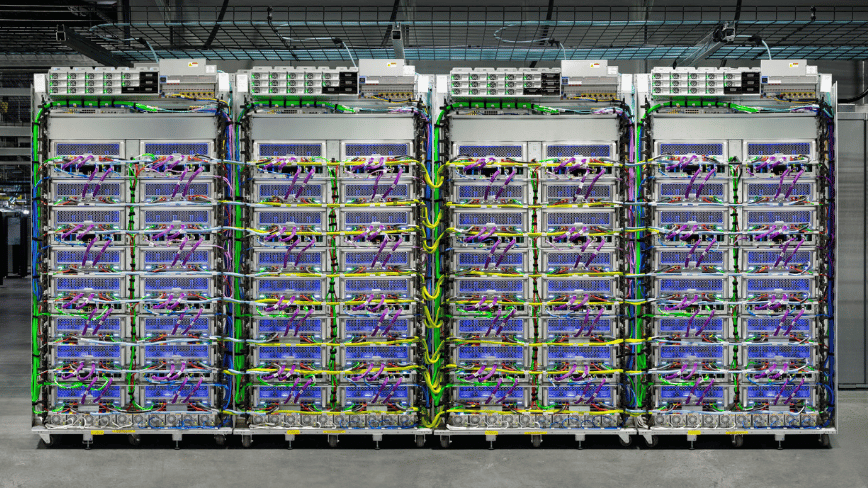
In brief: Anthropic has entered into a groundbreaking agreement to access around 3.5 gigawatts of advanced Google TPU compute capacity via Broadcom starting in 2027. This marks Anthropic's largest infrastructure commitment so far, coinciding with a report that its revenue run rate has exceeded $30 billion, significantly up from approximately $9 billion at the end of 2025.
On April 6, 2026, Anthropic announced a strategic partnership that will provide it with multiple gigawatts of next-generation compute power through Google and Broadcom. This agreement will enhance Anthropic's capabilities as it scales its infrastructure in response to soaring demand, which has grown immensely over the past two years. Beginning in 2027, the deal will supplement the existing 1 gigawatt of capacity provided to Anthropic in 2026.
Krishna Rao, Anthropic's CFO, emphasized the significance of this agreement, calling it "our most significant compute commitment to date." He noted that this deal is a continuation of the company’s disciplined strategy for scaling its infrastructure. The majority of the new compute capacity will be developed in the United States, reinforcing Anthropic's pledge from November 2025 to invest $50 billion in American AI computing infrastructure.
Broadcom's Role in the Partnership
This announcement highlights the crucial role of Broadcom, which will serve as the intermediary between Google’s custom silicon and Anthropic’s workloads for training and inference. Additionally, Broadcom has secured its own long-term agreement with Google to design and deliver future generations of custom TPU chips and to ensure the supply of networking components for Google’s upcoming AI data racks until 2031.
Broadcom has become an essential player in the AI infrastructure domain. Under the leadership of CEO Hock Tan, the company is focused on creating the silicon and interconnections foundational to AI models. Following the announcement, Broadcom's shares rose about 3% in after-hours trading, indicating strong investor confidence in companies that are pivotal at the hardware level of AI infrastructure. Analysts at Mizuho predict that Broadcom could generate $21 billion in AI revenue from Anthropic in 2026, escalating to $42 billion in 2027, which illustrates the financial implications of this partnership.
Broadcom first hinted at the scale of its collaboration with Anthropic in September 2025, when it revealed that a significant customer had placed a $10 billion order for custom TPU racks. By December 2025, it was confirmed that this customer was indeed Anthropic, with an additional order of $11 billion following shortly thereafter. The April 2026 announcement solidifies this collaboration, evolving from an initial $21 billion commitment to a comprehensive multi-gigawatt infrastructure agreement.
Driving Factors Behind the Compute Deal
The significance of this compute deal is closely tied to Anthropic's rapid commercial growth. The company's revenue run rate has now surpassed $30 billion, marking a dramatic increase from approximately $9 billion at the end of 2025. This growth trajectory is largely attributed to a surge in enterprise sales that gained momentum after Anthropic's Series G funding round on February 12, 2026, which raised $30 billion at a valuation of $380 billion.
Following the Series G round, Anthropic reported that over 500 business customers were spending more than $1 million annually on its services. As of the April announcement, that number has doubled to over 1,000, highlighting the rapid adoption of Anthropic's offerings. This expansion necessitates increased compute capacity, resulting in a direct correlation between revenue growth and infrastructure scaling.
Cohesive Multi-Cloud Strategy
What sets Anthropic's infrastructure approach apart is its commitment to a multi-vendor chip strategy. The company utilizes a diverse range of hardware platforms for training and serving its AI model, Claude, including Amazon’s Trainium chips, Google’s TPUs, and Nvidia GPUs. This strategy allows Anthropic to operate resiliently across major cloud platforms—AWS, Google Cloud, and Microsoft Azure—making Claude the only frontier model available on all three platforms.
This multi-vendor approach offers Anthropic both flexibility and negotiation power, allowing it to manage capacity constraints effectively. If one platform encounters supply issues or pricing pressures, workloads can be redistributed without significant disruption. This strategy echoes similar practices seen in Microsoft’s AI model development, which seeks to mitigate risks tied to single-vendor dependencies.
Commitment to U.S. Infrastructure
The April deal directly supports Anthropic’s prior commitment to invest $50 billion in American AI computing infrastructure, initially established in collaboration with Fluidstack. This investment is expected to result in data center operations in Texas and New York coming online by 2026, with the new Broadcom capacity extending this initiative into 2027 and beyond.
The focus on domestic infrastructure aligns with the U.S. government's AI Action Plan, which emphasizes the strategic importance of U.S.-based compute capacity. Anthropic’s alignment with this initiative indicates a dual strategy of both genuine commitment and tactical positioning within regulatory frameworks, ultimately securing a substantial share of the upcoming global AI training capacity within the United States.
Implications of the Compute Arms Race
The partnership between Anthropic, Google, and Broadcom underscores a growing trend among AI companies as they grapple with escalating compute demands. The fast growth of AI labs has led to increased reliance on complex financial arrangements, akin to those seen in traditional infrastructure sectors. This trend is paralleled by other significant infrastructure deals within the AI landscape, such as Meta’s recent $27 billion agreement with Nebius.
The evolving compute landscape also influences how AI firms interact with services built upon their models. Anthropic has taken steps to restrict access to Claude through specific third-party frameworks, reflecting the need to manage the financial dynamics of frontier model inference effectively. For Broadcom, this partnership signifies a transformative shift, establishing it as a vital component of the infrastructure supporting leading AI models, including Google’s Gemini and Anthropic’s Claude. This transition marks a significant change in the semiconductor industry, elevating Broadcom's status in the AI compute ecosystem.
Source: TNW | Anthropic News